Atlassian · Design Lead

Atlassian and
Accessibility

What started as an org-wide accessibility audit (VPATs), took a turn from audit to creating a strategy for A11y as an embedded Atlassian practice — unblocking public-sector and enterprise sales along the way.

Atlassian and accessibility
AAWCAG 2.1 conformance achieved
40Core user flows audited
VPATDelivered to unblock enterprise deals

Context

Why accessibility

To make Atlassian's Data Center products truly enterprise-grade, they had to work for every user. What we discovered during the VPAT process spurred us to create a vision for operationalizing inclusion. To make it successful, we needed to touch community, culture, and practices.

The Challenge

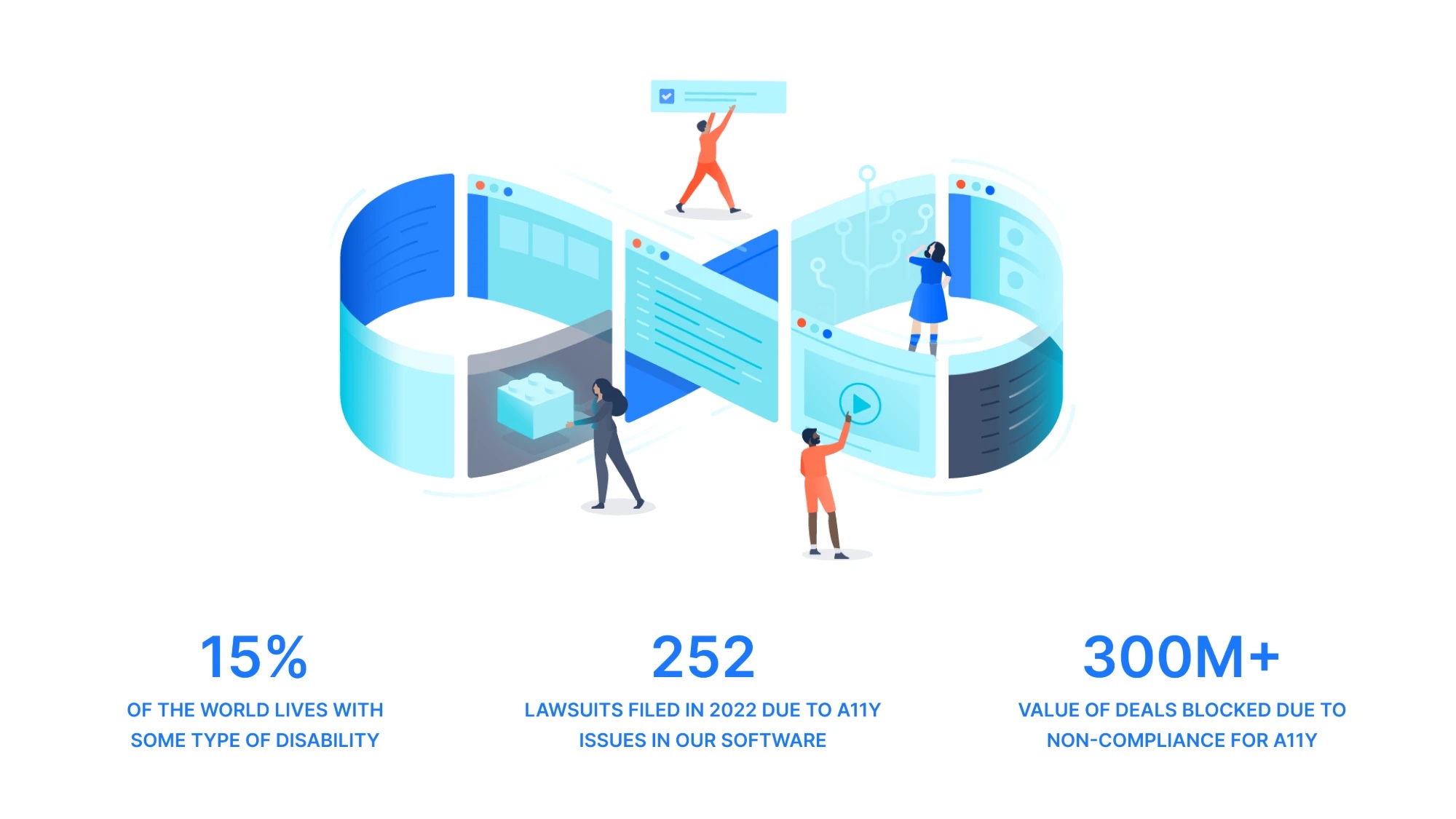
Accessibility had to be retrofitted into a legacy platform at scale — a steep technical and organizational hurdle. Critical bugs were blocking vital public-sector and enterprise deals, and there was no shared, sustainable process for keeping products accessible over time.

The Opportunity

A coordinated, org-wide push — audit, remediation, and transparent documentation — could unblock those deals immediately, and turn accessibility from a one-off audit into an ongoing, embedded practice.

Accessibility score from the audit

The Audit

An org-wide accessibility audit

We assessed 40 core user flows against WCAG 2.1 AA, scoring every area and surfacing the issues that mattered most — turning a vague mandate into a concrete, prioritized picture of exactly where the platform stood.

Building Empathy

Grounded in real user experience

Regular listening sessions with people who rely on screen readers, keyboard navigation, and other assistive tech kept the work grounded in lived experience — so fixes solved real problems, not just checklist items.

Building empathy for users with disabilities
Leadership supporting the importance of accessibility

Culture & Leadership

Backed from the top down

Accessibility wasn't a side project. Leadership set it as an explicit goal — with dedicated OKRs and regular Town Hall moments — giving teams the mandate and momentum to treat accessibility as everyone's responsibility.

The Vision

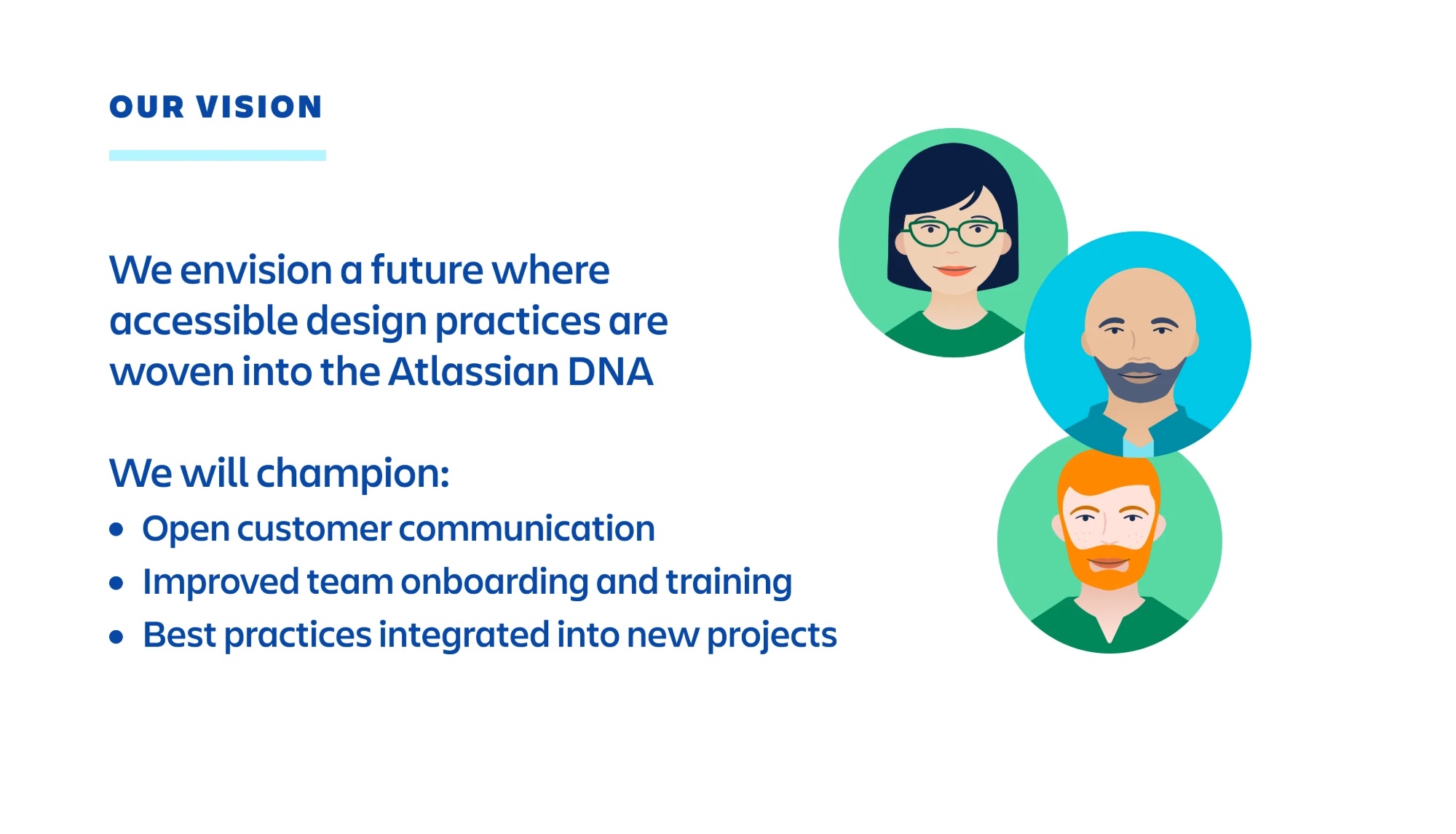
From audit to embedded practice

The lasting outcome wasn't a one-time fix — it was a new way of working. We mapped out a cross-functional accessibility team, pairing dedicated designers, engineers, and a product manager, with shared rituals, tooling, and acceptance criteria — so accessibility became a first-class input into discovery, design reviews, implementation, and QA, not a late-stage audit.

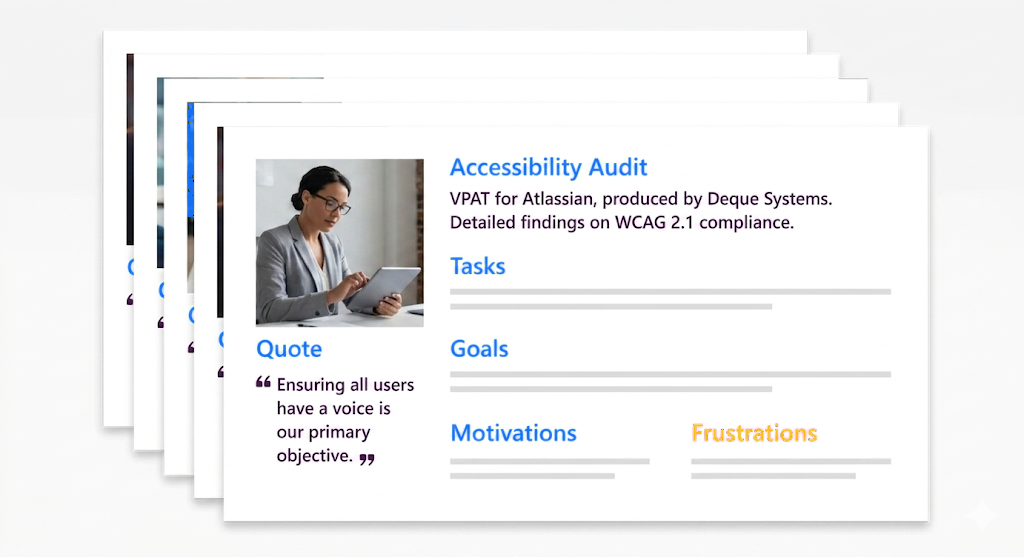
Accessibility personas and audit cards

Next case study

Portfolio
Insights

Open case study →